
Around the world, the gender gap in STEM remains a worrying reality. Even today, only 35 % of STEM graduates are women. In Europe, the situation remains mixed: barely 18 % of female students go into engineering and IT.
In Africa, figures vary from country to country. However, a clear trend is emerging: progress is possible when concrete actions are taken, early and sustainably.
Africa faces the challenge of STEM equality
On the African continent, several indicators show both the potential and the current limitations.
In African universities, around 47 % of STEM graduates (undergraduate and postgraduate) are women. Yet in sub-Saharan Africa, less than 30 % of STEM graduates are women.
In several southern African countries, despite an overall increase in university enrolment, there is still a shortage of women in STEM subjects. Added to this is the fact that over 19.3 million adolescent girls do not reach upper secondary level. For those who do, access to technical and scientific subjects remains limited.
Why every action counts
It's precisely in this context that engagement comes into its own. When a girl is exposed to science, encouraged to ask questions and supported in her efforts, her outlook changes. Studies show that confidence, perseverance and success in scientific subjects are strongly linked to the family and educational environment.
Girls who receive positive support are more likely to see STEM as a possible, legitimate and attainable choice.
Girlsday237: turning numbers into opportunities
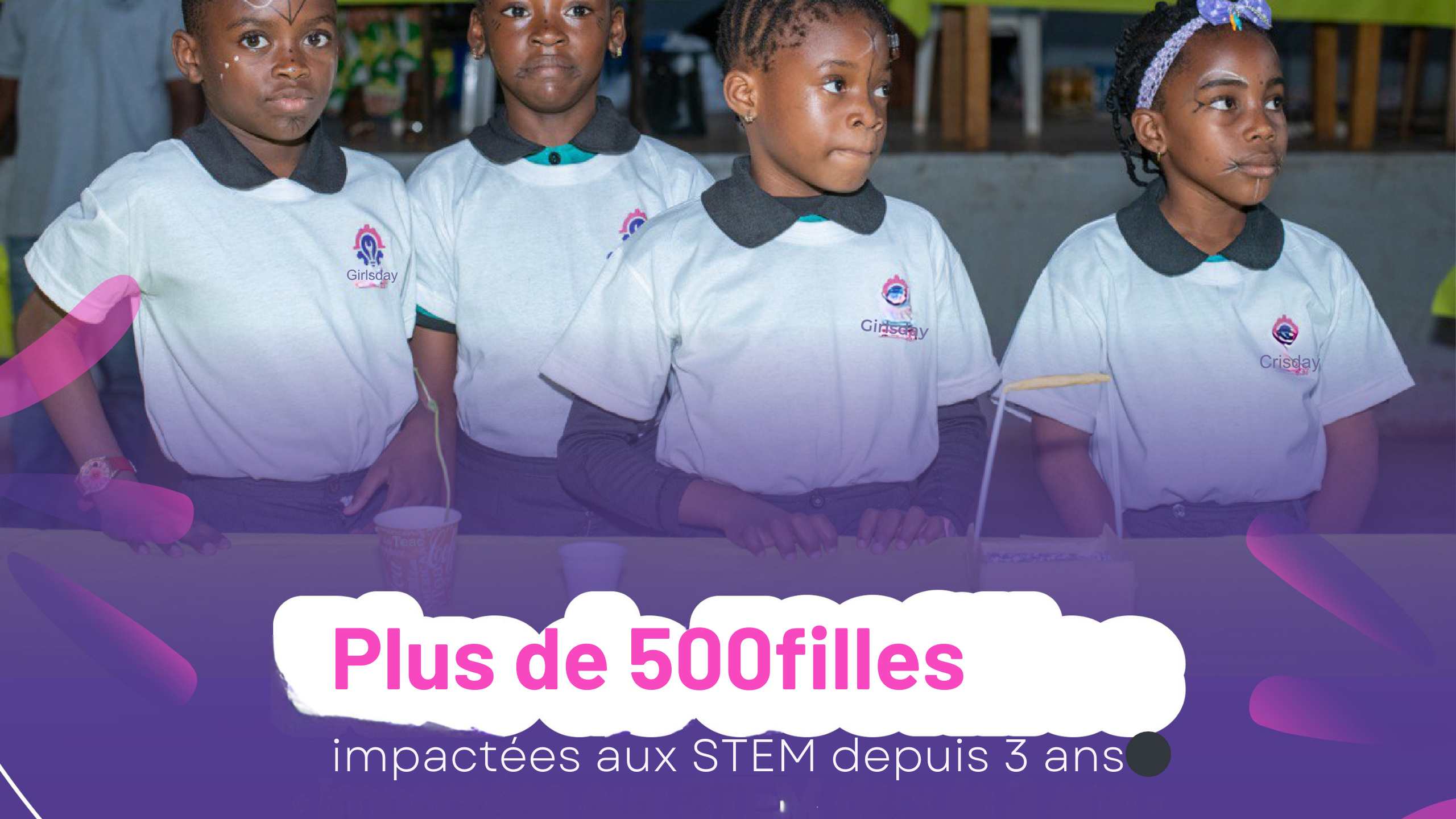
For the past three years, Girlsday237 has been taking concrete action in the field.
More than 500 girls have already been reached through awareness-raising activities, science competitions, hands-on workshops and self-expression areas where curiosity is encouraged.
Each edition is designed to show that STEM is not abstract, nor reserved for an elite. They are accessible, useful and deeply linked to local realities: water, energy, environment, health.
Encouraging curiosity and confidence
Testimonials from participants are clear. It's often the little things that make the difference:
- discover a scientific experiment for the first time,
- to see a woman evolve in a technical profession,
- be encouraged to try, even if it means making a mistake.
When effort is valued over immediate results, the fear of failure diminishes. Confidence gradually builds.
Focus on models and projection
Seeing a local woman engineer, scientist or technologist remains a powerful lever. These models make career paths concrete and credible. They show that STEM is not just a school subject, but a possible career path that can have an impact and a future.
Continuing to write history together
Numbers show challenges. Actions show solutions.
In three years, over 500 girls have already taken a step forward thanks to Girlsday237. And that's just the beginning.
Every support, every partnership, every commitment opens new doors. Together, we can make a lasting difference to African girls' access to STEM and give them the keys to building their future.