

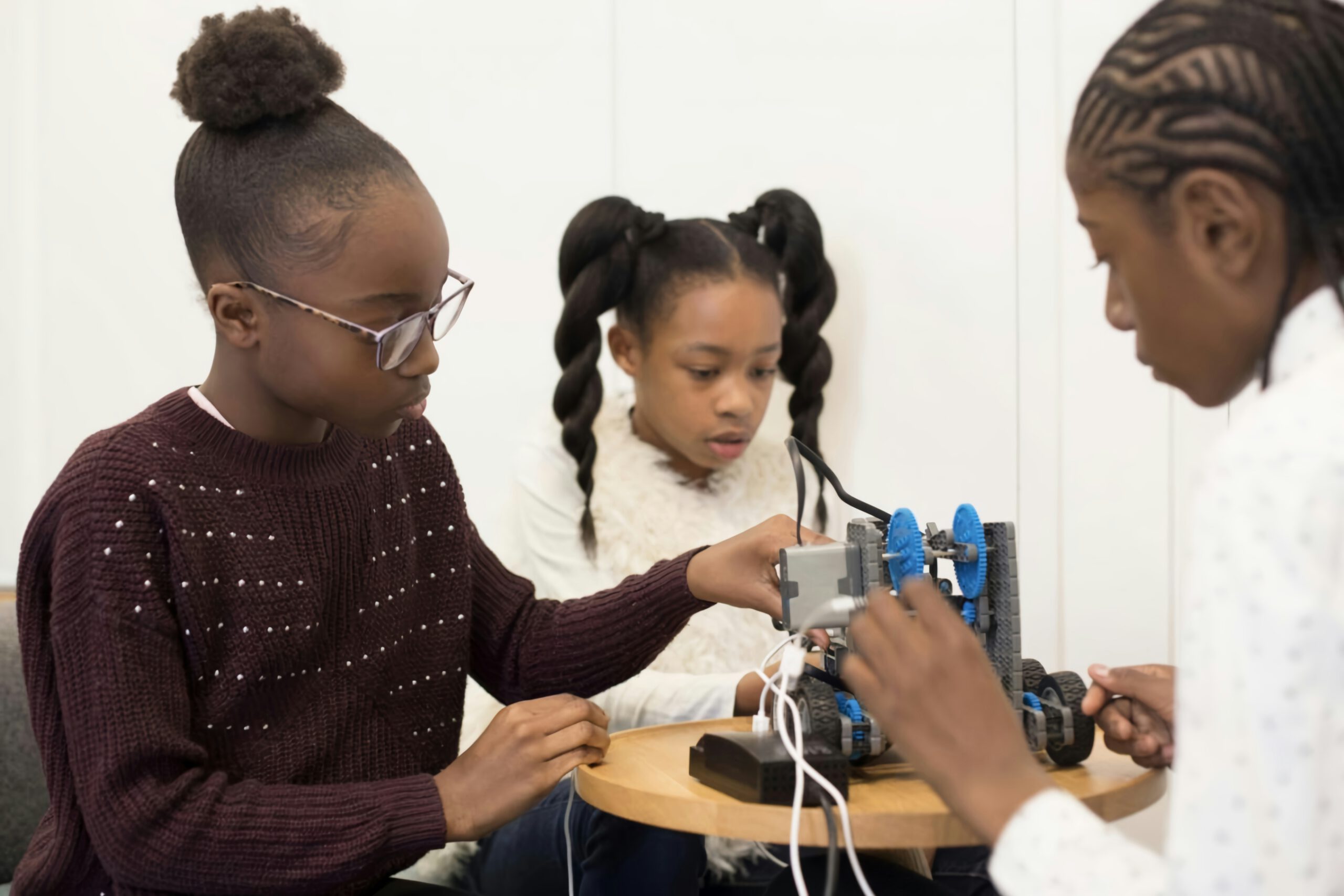
Our educational tools
These projects are designed to awaken the scientific and creative minds of young students through fun, hands-on experiments.
Fill in this form to receive the "Car on the Move" brochure:
Fill in this form to receive the "Building an Elevator" brochure:
Fill out this form to receive the "Medication Transport" brochure:
Fill out this form to receive the "Robot Cleaner" brochure:
Fill out this form to receive the "taking temperature" brochure:
Fill in this form to receive the "Tapis Roulant" brochure:
Fill in this form to receive the "Project 3: Catapult" brochure:
Fill out this form to receive the brochure "Robot Cleaner":
Fill out this form to receive the brochure "drug delivery":
Fill in this form to receive the brochure "Project 1: Building a Bridge of your choice" :
Fill in this form to receive the "Project 2 Botanique" brochure:
Fill in this form to receive the "moving car" brochure:
Fill in this form to receive the brochure "Conveyor belt:
Fill in this form to receive the "Building an Elevator" brochure: :
Fill in this form to receive the "Temperature Measuring Robot" brochure:
Choice of bridge construction
Project 1
Build a motorized or automated bridge to explore structure, mechanics and applied robotics.
Project
Catapult
Project 3
Understand launch principles and levers by building a catapult.
Project
Botany
Project 2
Observe germination and design a robotic system to transport plants without water loss.
English version of documents
Conveyor
belt
Level : 2nd Grade
Discover the mechanisms of a conveyor belt, just like on an assembly line.
Moving
because
Level : 3rd Grade
Understand the mechanics of movement with a car to build
Building an
elevator
Level: 4th Grade
Build a miniature elevator to learn about lifting systems.
Robot
Cleaner
Level : 2nd Grade
I built a super robot to help clean our hospital.
Temperature
measuring robot
Level : 3rd Grade
A robot designed to assist medical staff in taking patients’ temperatures could be a valuable tool, especially in situations where minimizing physical contact or maximizing efficiency is crucial. Here's a design concept:**Robot Name:** TempCare Bot**Core Function:** To autonomously and accurately measure patient body temperature and relay the data to medical staff.**Key Features & Design Elements:**1. **Mobility:**
* **Wheeled Base:** A stable, low-profile wheeled base with omni-directional wheels for smooth navigation in hospital corridors, patient rooms, and various floor surfaces.
* **Obstacle Avoidance:** Equipped with LiDAR, ultrasonic sensors, and depth cameras to detect and avoid obstacles, ensuring safe movement around equipment, furniture, and people.
* **Self-Docking/Charging:** A designated charging station for autonomous return and recharging when battery levels are low.2. **Temperature Sensing Module:**
* **Non-Contact Infrared Thermometer:** A high-precision, medical-grade infrared sensor mounted on a retractable or adjustable arm. This allows for contactless temperature measurement, reducing the risk of cross-contamination.
* **Facial Recognition/Targeting:** Integrated camera with AI-powered facial recognition to accurately identify the patient and target the correct measuring point (e.g., forehead).
* **Environmental Compensation:** Algorithms to adjust for ambient room temperature and humidity to ensure accurate readings.
* **Optional Contact Probes:** For situations requiring higher accuracy or specific medical protocols, interchangeable probes (e.g., ear thermometers) could be an option, with automated cleaning/sanitization mechanisms.3. **User Interface & Communication:**
* **Touchscreen Display:** A user-friendly touchscreen interface for medical staff to initiate measurements, select patients, view readings, and manage settings.
* **Voice Controls:** Basic voice commands for hands-free operation (e.g., "Start temperature check," "Next patient").
* **Wireless Connectivity (Wi-Fi/Bluetooth):** Seamless integration with hospital Electronic Health Records (EHR) systems to automatically log temperature data, along with timestamps and patient identifiers.
* **Auditory & Visual Alerts:** Notifies staff of abnormal temperature readings, low battery, or system errors through beeps, voice prompts, and on-screen notifications.
* **Small Camera:** For visual confirmation of patient identification and room environment.4. **Robot Arm & Actuation:**
* **Articulated Robotic Arm:** A multi-jointed, dexterous arm to position the temperature sensor precisely at the optimal distance and angle from the patient's forehead.
* **Gentle & Precise Movement:** Smooth, controlled movements to avoid startling or disturbing the patient.
* **Retractable/Stowable:** The arm should retract or stow neatly when not in use for safety and to reduce its footprint.5. **Sanitization:**
* **Automated UV-C Sanitization:** A UV-C light system integrated into the robot to automatically sanitize the temperature sensor after each use, particularly important for contact probes.
* **Antimicrobial Surfaces:** The robot's exterior surfaces should be made of antimicrobial materials for easier cleaning and reduced germ transmission.6. **Safety Features:**
* **Emergency Stop Button:** Easily accessible physical emergency stop buttons on the robot.
* **Soft Bumpers:** Impact-absorbing materials around the base to minimize damage in case of accidental collisions.
* **Collision Detection & Avoidance:** As mentioned in mobility.
* **Patient Comfort:** Designed to be unobtrusive and quiet, minimizing patient anxiety.**Workflow Example:**1. Medical staff initiates a temperature check request via the robot's touchscreen or EHR system.
2. The TempCare Bot navigates to the designated patient room.
3. Upon entering, it uses its camera and facial recognition to identify the correct patient.
4. The robotic arm extends, and the infrared thermometer is positioned at the optimal distance from the patient's forehead.
5. The temperature is measured quickly and accurately.
6. The reading, along with patient data, is automatically sent to the EHR.
7. The robotic arm retracts, and the UV-C light sanitizes the sensor.
8. The robot may then proceed to the next requested patient or return to its charging station.**Benefits:*** **Enhanced Infection Control:** Reduces direct contact between staff and patients, minimizing the risk of pathogen transmission.
* **Increased Efficiency:** Automates a routine task, freeing up nurses and other medical personnel for more critical duties.
* **Remote Monitoring:** Allows for temperature checks in isolation wards or situations where staff presence might be limited.
* **Consistent Accuracy:** Minimizes human error in measurement and data logging.
* **Data Integration:** Seamlessly integrates with existing hospital IT infrastructure.This design aims to create a reliable, safe, and user-friendly robot that can effectively support medical staff in a healthcare setting.
Medicine
delivery
Level: 4th Grade
Build a robot for internal medication delivery in hospitals.